
Orange County Chimney Inspection Requirements for Home Insurance in 2026
Orange County homeowners face stricter chimney inspections in Orange County requirements for home insurance in 2026 than at any point in the past decade. California’s tightening underwriting environment, combined with wildfire exposure and seismic activity, has pushed insurers to treat unmaintained chimneys as a documented risk factor.
Lucky Sully Chimney Sweep has served Orange County since 2004. This guide covers what insurers look for, which inspection level satisfies their requirements, and how to build a documentation record that protects coverage.
Why California Insurers Are Tightening Chimney Standards in 2026
The California insurance market shifted significantly between 2024 and 2026. Several major carriers reduced coverage availability across Southern California. Those that remained began requiring more detailed property condition documentation before issuing or renewing policies.
Chimneys moved from a background item to a front-line concern for two reasons. First, the connection between chimney fires and whole-home fires became harder for carriers to ignore. Second, the cost of chimney-related claims in fire-adjacent communities pushed underwriters to treat uninspected chimneys as an elevated risk category.
The Wildfire Pressure on Orange County Homeowners
Communities across southern Orange County sit in Cal Fire-designated fire hazard severity zones. Laguna Niguel, Mission Viejo, San Juan Capistrano, and parts of Irvine all carry elevated wildfire exposure ratings. An unmaintained chimney in these zones presents two compounding risks.
The first is an internal chimney fire from creosote buildup. The second is external ember intrusion through a damaged or missing chimney cap. Insurers writing policies in these communities now factor chimney conditions into their risk scoring. A chimney without a documented annual inspection is increasingly flagged as an unverified hazard.
How Seismic Activity Makes Chimney Condition a Policy Risk
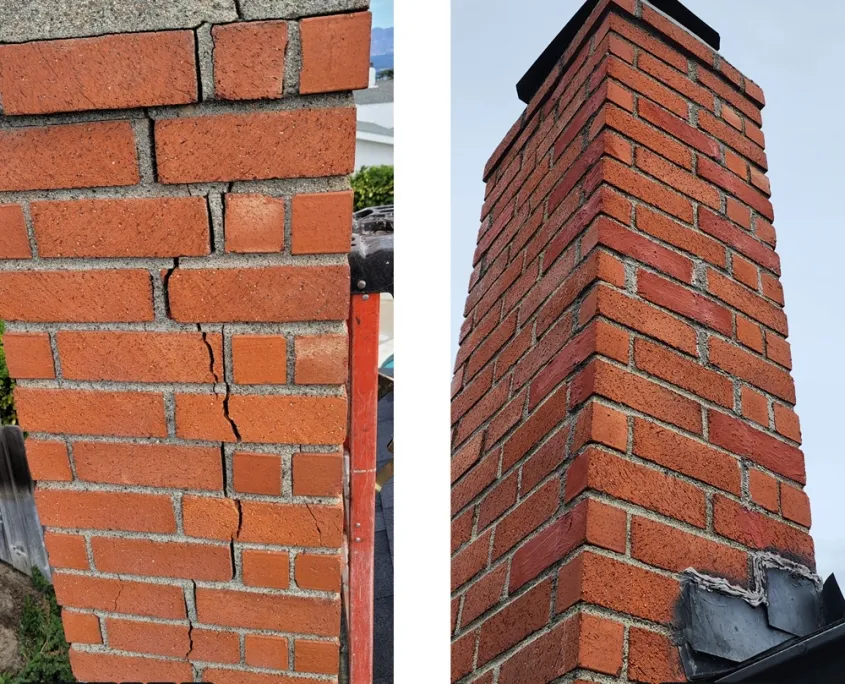
Orange County sits within seismic reach of multiple fault systems. The Newport-Inglewood fault runs directly through the county. Earthquakes cause mortar joint cracking, brick displacement, and flue liner fractures. These defects are invisible from the ground and often missed by standard home inspectors.
Seismic cracks allow combustion gases, including carbon monoxide, to migrate into living spaces. They also compromise the structural integrity of the chimney stack. A Level 2 video inspection is the only reliable method for detecting this damage. Carriers underwriting OC homes increasingly ask for recent inspection records as part of the underwriting file.
What the NFPA 211 Standard Requires for Chimney Inspections
The National Fire Protection Association’s NFPA 211 standard governs chimney inspection, maintenance, and installation across the United States. It defines three inspection levels and sets the frequency baseline that most insurance carriers reference. Understanding the three levels helps homeowners know exactly what an insurer is asking for.
Level 1: The Annual Baseline Every Homeowner Needs
A Level 1 inspection covers all readily accessible parts of the chimney. That includes the exterior, the firebox, the damper, the smoke chamber, and the visible portions of the flue. The technician confirms the chimney is free of obstructions and combustible deposits. No obvious structural deterioration should be present.
NFPA 211 recommends a Level 1 inspection annually for any chimney in continuous use. Most standard homeowners insurance policies that mention chimney maintenance are satisfied by documented annual Level 1 inspections. In Orange County in 2026, the cost runs between $100 and $250. Many certified sweeps include it with a cleaning visit.
Level 2: When Insurers Trigger a Deeper Look
A Level 2 inspection includes everything in Level 1, plus a video scan of all flue liner surfaces. It also covers accessible concealed areas: attics, crawl spaces, and basements where the chimney passes through. This level is required after a chimney fire, a seismic event, a change of fuel type, or when a home is sold.
In Orange County, a Level 2 inspection with video costs between $250 and $600. That range depends on chimney height, access conditions, and flue configuration. When an insurer requests documented inspection records following a claim, they are typically asking for a Level 2 report. A standard sweep receipt does not satisfy that request.
Level 3: The Scenario Most OC Homeowners Will Never Need
A Level 3 inspection is reserved for situations where severe damage is suspected and accessing it requires partial demolition of the chimney or surrounding structure. It is rare, expensive, and triggered by major events rather than routine policy compliance.
What Home Insurers Specifically Check on Orange County Chimneys
When an insurer reviews a chimney inspection report for an OC property, three areas drive their risk assessment. Lucky Sully Chimney Sweep provides written reports with photographs and video after every inspection. That documentation is exactly what carriers require.
Structural Integrity and Masonry Condition
Insurers look for evidence of active deterioration: spalling bricks, cracked mortar joints, crown fractures, and displaced sections of the chimney stack. Any structural deficiency raises the probability of a catastrophic failure during a fire event.
In OC homes built before 1990, earthquake-related mortar damage is extremely common. It is also frequently undetected. A crack that appears minor from the roofline often extends through multiple flue joints when viewed on video.
Flue Liner and Creosote Status
The flue liner is the inner wall of the chimney. It contains combustion gases and transfers heat safely to the exterior. Cracked, missing, or deteriorated liner sections are among the most common findings in Orange County homes. This is especially true in older masonry chimneys and prefab fireplaces that have seen decades of use.
Creosote buildup is graded in three stages. Stage 1 is light and brushes away during a standard sweep. Stage 2 is hardened and requires chemical treatment. Stage 3 is glazed and constitutes a near-certain chimney fire risk. Insurers treat an undocumented chimney as a presumed Stage 2 or worse, because there is no way to verify the condition without a professional report.
Chimney Cap, Crown, and Flashing
The cap prevents rain, debris, and animal intrusion. The crown seals the top of the masonry around the flue tile. The flashing seals the joint where the chimney meets the roofline. All three are points of water entry when damaged.
Water damage from a compromised crown or flashing spreads into the roof deck, attic framing, and interior walls. Insurers in California are increasingly attentive to water damage pathways. A missing or corroded cap is flagged immediately on any inspection report reviewed by an underwriter.
What Chimney Problems Can Trigger a Claim Denial or Premium Increase
Not every chimney deficiency results in a denied claim. But specific conditions create real exposure for homeowners who have not maintained inspection records. Addressing these with proper chimney and fireplace repairs before a policy renewal is far less costly than disputing coverage after a fire.
The conditions that most commonly affect claim outcomes include a damaged or missing flue liner. Stage 2 or Stage 3 creosote buildup documented at the time of the fire investigation is another frequent finding. A cracked chimney crown that allowed water intrusion before interior damage occurred also appears regularly in claim files. Missing or non-functional chimney caps leading to animal nesting or debris blockage round out the list.
Insurance adjusters review the gap between the last documented inspection and the date of the loss. A gap of more than two years, combined with any of the above conditions, gives an adjuster grounds to argue that neglect contributed to the loss. California homeowners have limited recourse in that scenario.
How to Document a Chimney Inspection for Insurance Compliance
Proof of inspection is only useful if it is organized and accessible. Many homeowners have had inspections completed but cannot locate the paperwork when a carrier requests records.
Homeowners in wildfire-zone communities, including those served by chimney sweep in Mission Viejo and surrounding cities, face a higher probability of an adjuster requesting maintenance records after a loss. The documentation package to maintain includes:
The written inspection report from a CSIA-certified or NFI-certified technician. The date of service and the technician’s credentials. Photographic and video evidence of the flue interior. Receipts for any repairs or cleaning performed after the inspection. A recurring schedule confirming annual inspections are planned.
Store physical copies and digital copies in separate locations. Cloud storage works well for video files. Physical receipts belong in the same folder as other homeowner documents such as the policy declaration and the property title.
Level 1 vs Level 2 vs Level 3: OC Cost and Coverage Comparison
| Inspection Level | What It Covers | Typical OC Cost 2026 | When Insurers Require It |
|---|---|---|---|
| Level 1 | Accessible exterior, firebox, damper, visible flue portions. No video. | $100 to $250 (often bundled with cleaning) | Annual policy maintenance requirement |
| Level 2 | All of Level 1 plus full video scan of flue liner, attic and crawl space check | $250 to $600 | After chimney fire, seismic event, home purchase or sale, change of fuel type, or insurer request |
| Level 3 | All of Level 2 plus partial demolition to access concealed damage | $1,000 and above | Severe structural damage suspected, major fire event |
Costs vary based on chimney height, number of flues, access conditions, and whether cleaning is performed at the same visit. Always request a written quote before work begins.
How Often Should Orange County Homeowners Schedule an Inspection
NFPA 211 recommends annual inspections for all chimneys in active use. For Orange County homeowners in wildfire-adjacent communities, annual is the minimum, not a target to stretch.
Homeowners who use their fireplace three or more times per week are building creosote faster than occasional users. Those homeowners benefit from inspecting and sweeping twice per year: once before the fire season begins in autumn and once after it ends in spring.
Homeowners who have not used their fireplace in several years still need an inspection before lighting a fire. Animal nesting, water intrusion, and passive mortar deterioration occur without any fireplace use. A chimney sitting unused for two winters in a coastal OC climate can accumulate moisture-related liner damage. Regular use combined with annual cleaning often produces a better condition than years of neglect.
Not sure when the chimney was last professionally inspected? Lucky Sully Chimney Sweep covers all of Orange County with video inspections on every call. Call (714) 342-7415 or visit the contact page to schedule. A written report is provided after every visit, ready for the insurer file.
What Happens When an Inspection Is Skipped and a Claim Is Filed
The scenario plays out more often than most homeowners expect. A chimney fire starts, the fire department responds, and within days an adjuster is requesting maintenance records. If no documented inspection exists, the adjuster has grounds to investigate whether neglect contributed to the loss.
California homeowners insurance policies are generally not explicit about chimney inspection frequency. The issue arises through the policy’s general maintenance and neglect exclusions. These allow an insurer to reduce or deny a payout when known deterioration was left unaddressed. An inspection report noting Stage 2 creosote, followed by no documented cleaning, is exactly the kind of record that supports a partial denial.
The Chimney Safety Institute of America homeowner resources page covers what certified inspections involve and what homeowners should expect from a qualified sweep. Homeowners whose inspection records come from a CSIA or NFI-certified technician are in a significantly stronger position during any claim review.
What to Look for in a Certified Chimney Inspector in Orange County
Not every chimney company performs inspections to the same standard. When selecting a provider for an insurance-grade inspection, three qualifications matter.
First, the technician should hold a certification from the Chimney Safety Institute of America (CSIA) or the National Fireplace Institute (NFI). These certifications require examination and continuing education. An uncertified sweep can clean a chimney. Only a certified inspector can produce a report that carries weight with an insurance carrier.
Second, the company should use a video camera on every inspection, not a handheld mirror. Mirror inspections miss the majority of liner cracks. This is particularly true in tight or offset flue configurations common in older OC homes. A written report without video evidence is not sufficient documentation for most insurers reviewing a claim.
Third, the inspection report should be detailed, dated, and signed. It should identify the technician by name and credential, describe every area examined, note any deficiencies, and recommend next steps. A one-page sweep receipt does not meet this standard.
Lucky Sully Chimney Sweep has served Orange County for over 20 years with NFI-certified technicians and high-resolution video equipment on every call. Written reports are sent to homeowners after every inspection. When an insurer asks for documentation, the file is already complete.
Conclusion
Orange County homeowners are navigating a harder insurance market than at any point in recent memory. The chimney inspection requirements carriers are applying in 2026 are specific: annual Level 1 inspections for routine policy compliance, Level 2 video inspections after seismic events, chimney fires, or home purchases. Either way, the inspection report only protects coverage when it comes from a certified technician and is kept on file.
For a full breakdown of what a video-assisted inspection examines and how findings are documented, the Level 2 chimney inspection guide covers the process in detail. Building that documentation record before a claim arises is one of the most practical protective steps available to any Orange County homeowner with a fireplace. Lucky Sully Chimney Sweep has been helping OC homeowners do exactly that since 2004.
Lucky Sully Chimney Sweep is Orange County’s trusted choice for certified chimney inspections. Call (714) 342-7415 or reach the team through the contact page to book a video inspection with a written report. Same-week availability is offered across all OC service areas, and every inspection includes the documentation carriers need.
Frequently Asked Questions
1. Do all home insurance policies in Orange County require a chimney inspection?
Not every policy includes explicit chimney inspection language, but the absence of a written requirement does not protect homeowners from claim disputes. Most California homeowners insurance policies contain general maintenance and neglect exclusions. If a fire investigator or adjuster can show that a chimney was in deteriorated condition at the time of a loss, the insurer can act. If that condition existed before the fire started, the neglect clause allows them to reduce or deny the claim. In practice, insurers in Orange County are increasingly requesting proof of recent inspection during coverage renewals, particularly for homes in fire hazard severity zones. Maintaining documented annual inspections eliminates this vulnerability. NFPA 211 recommends annual inspections for all actively used chimneys. Most carriers treat this as the accepted maintenance baseline for OC homes.
2. What chimney inspection level do most California insurers require in 2026?
For routine policy renewals, a documented Level 1 inspection performed by a certified technician within the past 12 months is generally sufficient. A Level 1 covers all accessible exterior and interior chimney components and confirms the system is free of obstructions and combustible deposits. However, if a homeowner is purchasing a new property or has experienced a chimney fire or seismic event, many carriers will ask specifically for a Level 2 inspection. A Level 2 includes a full video scan of the flue liner. It is the only reliable method for detecting crack patterns caused by earthquake activity or heat stress. Orange County homeowners in fire hazard zones who have not had a Level 2 inspection in the past three to five years should strongly consider scheduling one, regardless of whether an insurer has explicitly requested it.
3. How much does a chimney inspection cost in Orange County in 2026?
Costs in Orange County in 2026 range from approximately $100 to $250 for a standard Level 1 inspection. Many certified chimney sweep companies include the Level 1 as part of a combined cleaning and inspection visit. A Level 2 inspection with full video scanning typically costs between $250 and $600. That range depends on chimney height, the number of flues, and site access conditions. Level 3 inspections involving partial demolition are rare and priced individually, often exceeding $1,000. Always ask for a written quote before authorizing work. Confirm the price includes a written inspection report with photographs and, for Level 2, a video file of the flue scan for insurance records.
4. Can a chimney inspection finding cause homeowners insurance to be cancelled in California?
A chimney inspection finding itself does not trigger policy cancellation. However, if an inspection report documents a serious deficiency, the insurer may respond. A collapsed flue liner, severe creosote buildup, or significant structural damage can each prompt a notice requiring repairs within a specific timeframe as a condition of continued coverage. This is distinct from cancellation and is a better outcome than discovering the problem during a claim investigation. Addressing findings promptly with documented repairs closes the exposure. Ignoring a known deficiency and then filing a subsequent claim for fire damage is the scenario that creates the greatest legal and financial risk. Proactive remediation is always the right approach.
5. What records should homeowners keep after a chimney inspection to protect insurance coverage?
After every inspection, homeowners should retain the signed written inspection report, the technician’s certification credentials, the date of service, and any photographs or video provided. If cleaning or repairs were performed at the same visit, retain those receipts separately and note what specific deficiency was addressed. Keep both physical and digital copies. Digital copies stored in cloud storage are accessible even if a physical file is lost in a fire or natural disaster. Build a simple folder organized by year. The goal is to produce a continuous annual history showing the chimney has been inspected and maintained by a certified professional. Gaps of more than two years in that record create ambiguity that adjusters use when evaluating a chimney-related claim.
6. Does Lucky Sully Chimney Sweep provide written inspection reports for insurance purposes?
Yes. Lucky Sully Chimney Sweep provides every customer with a written inspection report, high-resolution photographs of all areas examined, and a video file of the flue scan where camera access is possible. The report identifies the technician by name, lists the inspection date, describes the condition of each component examined, notes any deficiencies, and provides recommended next steps. This report format meets the documentation standard that California homeowners insurance carriers expect when requesting proof of chimney maintenance. Technicians are NFI-certified and have served Orange County since 2004. Homeowners unsure whether existing records are sufficient are welcome to call (714) 342-7415 to discuss what their insurer requires and whether a new inspection is needed.


