
How Salt Air Damages Chimneys in Newport Beach, Huntington Beach and Laguna Beach
Homeowners along the Orange County coast often discover chimney damage that makes no sense on the surface. The fireplace was barely used, the roof looks fine, but the cap is rusted through and white staining runs down the brickwork. Salt air is almost always the cause.
How salt air damages chimneys in Newport Beach, Huntington Beach and Laguna Beach follows a predictable pattern once homeowners understand what is happening at the material level.
Lucky Sully Chimney Sweep has handled chimney sweep in Newport Beach and surrounding coastal communities since 2004. The damage seen on these homes is consistent, progressive, and preventable with the right maintenance schedule.
Why Coastal Orange County Is Harder on Chimneys Than Anywhere Inland
Chimneys in inland cities like Irvine or Mission Viejo face heat, creosote, and occasional moisture. Chimneys within two miles of the Pacific face all of those things plus a continuous chemical assault from salt-laden air. The deterioration rate gap between a coastal and an inland chimney, maintained on the same schedule, is significant.
How Salt Air Actually Damages Masonry and Metal
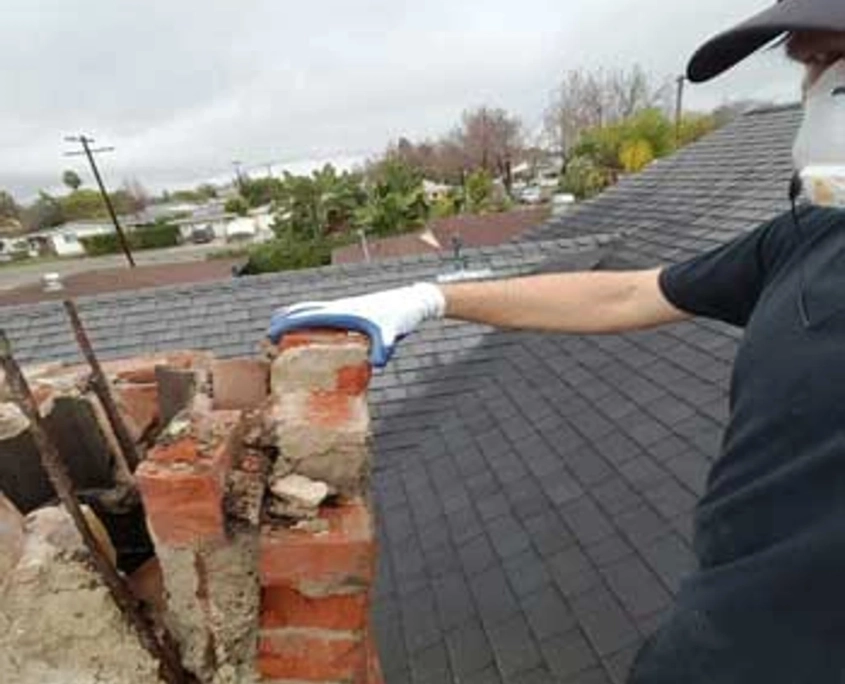
Salt air carries microscopic chloride particles suspended in moisture. When these particles settle on chimney masonry, they are absorbed into the porous surface of the brick and mortar. As the moisture evaporates, the salt crystallises inside the material rather than on the surface. This process is called subflorescence. The physical expansion of salt crystals inside brick or mortar exerts pressure that fractures the material from within.
On metal components, chloride ions accelerate the electrochemical oxidation process that causes rust. Standard galvanised steel is adequate for chimneys in dry inland environments. In coastal zones, it begins corroding within two to three years because the protective zinc coating is consumed by chloride attack before it can provide its intended lifespan.
Why Humidity Compounds the Problem in OC Coastal Zones
Orange County’s coastal climate maintains relatively high ambient humidity year-round, particularly during morning marine layer conditions. This persistent moisture keeps salt particles on chimney surfaces in a semi-dissolved state. The result is a near-continuous corrosive cycle rather than the intermittent wet-dry pattern that affects inland masonry.
This humidity also affects creosote behaviour inside the flue. Moisture-laden air entering the chimney from below combines with combustion gases to produce a more acidic creosote residue. Stage 2 creosote forms faster in coastal chimneys than in dry-climate chimneys burning the same wood at the same frequency.
How Salt Air Exposure Differs Across Newport Beach, Huntington Beach and Laguna Beach
Salt air damage is not uniform across the OC coast. Each of these three cities has a different coastal geography that determines the salt load a chimney faces and the direction from which exposure arrives.
Newport Beach: Harbour, Estuary and Open Ocean Exposure
Newport Beach presents a layered exposure challenge. Homes on Balboa Island, Lido Isle, and the Balboa Peninsula face direct Pacific exposure plus salt-rich air that circulates through Newport Harbour. The harbour acts as a salt air trap. It concentrates marine moisture and holds it longer than open coastal areas where sea breezes move through freely.
Homes on the hills above Corona del Mar receive ocean exposure from the southwest while remaining elevated above the immediate surf zone. These properties often show more crown and mortar joint damage than cap damage. Wind-driven salt particles settle on the upper masonry surfaces before the cap, making the crown the first failure point.
Huntington Beach: Open Pacific Surf Coast
Huntington Beach presents the most direct ocean exposure of the three cities. The coastline runs in an uninterrupted north-south orientation facing the open Pacific. Prevailing onshore winds carry salt spray directly inland with no natural barriers between the surf line and most residential neighbourhoods west of Beach Boulevard.
Wind-driven sand common along the Huntington Beach strand adds a second form of damage. Salt-laden sand particles act as an abrasive, physically stripping protective coatings and surface mortar from chimney exteriors. The combination of chemical salt attack and mechanical abrasion accelerates deterioration faster than salt air alone.
Laguna Beach: Cliff-Face and Hillside Exposure
Laguna Beach chimneys face a distinct set of conditions. Many homes sit on coastal bluffs that rise directly from the Pacific. Their chimneys are elevated into the same airstream that moves across the ocean surface, with no gradual transition zone between the water and the roofline.
Hillside properties in Laguna Beach also face drainage challenges. When salt-laden moisture migrates into chimney masonry and runs downward, it concentrates in the lower mortar courses and at the chimney base. Homeowners in Laguna Beach often see the most severe spalling and mortar loss in the lower third of the chimney stack. This is the opposite of what appears on flat coastal lots, where damage typically starts at the cap.
Which Chimney Components Fail First in a Salt Air Environment
Salt air does not damage all chimney components equally or simultaneously. Understanding which components carry the most risk helps homeowners prioritise inspection and maintenance correctly.
Chimney Caps and Chase Covers
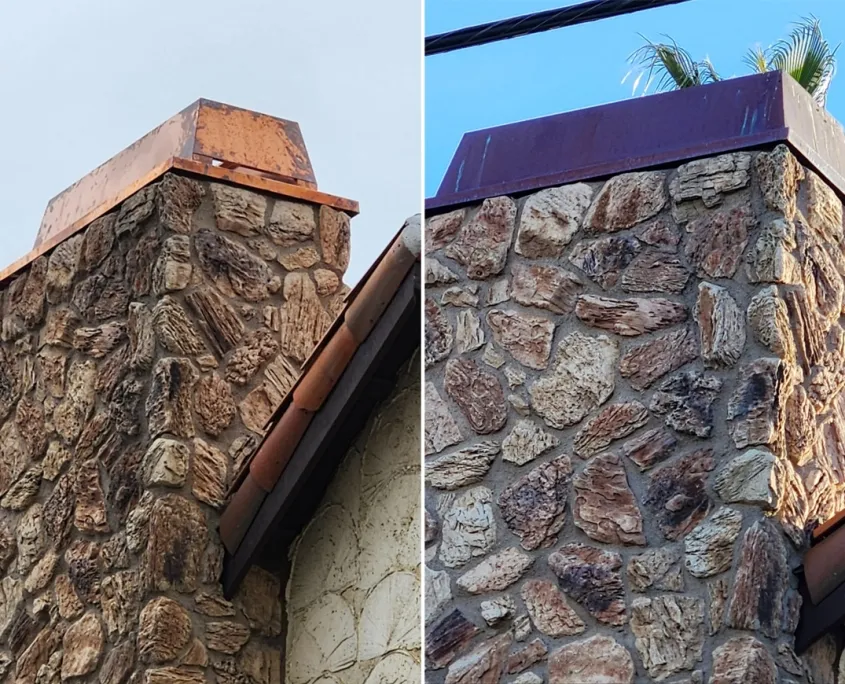
The chimney cap sits at the highest point of the stack, fully exposed to salt air. Standard galvanised steel caps begin showing surface rust within one to two years in direct coastal zones. Within three to five years without replacement, the mesh screen corrodes through. This creates gaps that allow rain, debris, and animals to enter the flue.
Chase covers on prefab chimneys face the same problem at a larger scale. These flat metal panels cover the entire chimney chase top. When they rust through at the edges or develop pinhole corrosion, water runs directly into the chase framing and down interior walls. Lucky Sully Chimney Sweep replaces corroded caps and chase covers with marine-grade stainless steel or copper. Both materials resist chloride attack far longer than galvanised alternatives.
Flashing and Mortar Joints
Chimney flashing seals the joint between the chimney and the roof surface. In a salt air environment, standard step and counter flashing corrode at the edges and along exposed fasteners. Once the seal degrades, water enters the joint and runs into the roof structure. This damage is often invisible from the ground and is only detected during a proper inspection.
Mortar joints between brick courses are equally vulnerable. Mortar is more porous than fired brick, so salt particles penetrate and crystallise inside the joint matrix faster. The first visible sign is usually hairline cracking along joint lines. Progressive cracking follows, and eventually sections of mortar fall away entirely. Repointing restores the joint seal, but salt concentration in coastal masonry means repointing cycles are shorter than in inland areas.
Flue Liners and Dampers
Cast iron throat dampers rust significantly faster in coastal environments than in dry climates. A damper lasting twenty years in an inland chimney may show structural corrosion within eight to ten years a mile from the ocean. Corroded dampers fail to seal completely when closed, allowing cold marine air and moisture into the firebox continuously.
Clay tile flue liners are less vulnerable to salt air than metal components because they do not oxidise. However, the mortar joints between flue tile sections absorb moisture and salt. In older chimneys where the original mortar has degraded, gaps allow acidic combustion gases and salt-laden air to reach the surrounding masonry. Video inspection is the only reliable method for assessing joint condition between flue tiles.
The Warning Signs Salt Air Damage Leaves on a Coastal Chimney
Salt air damage produces specific, identifiable signs that progress in a predictable order. Recognising them early reduces repair costs significantly.
The first sign most homeowners notice is efflorescence: white or grey powder staining on the exterior masonry. This is dissolved salt migrating through the brick and crystallising on the surface as moisture evaporates. Efflorescence alone does not indicate structural failure, but it confirms that active salt and moisture penetration are occurring. Ignoring it allows the subflorescence process to continue inside the material. Spalling follows within one to three years depending on the exposure level.
Spalling is the next stage. Brick faces fracture and fall away, leaving rough, pitted surfaces that absorb even more moisture and accelerate the deterioration cycle.
Rust staining below the cap or around the flashing line indicates metal component failure. Orange-brown streaks running down the chimney exterior from the cap mounting points signal that the cap is corroding from within its structural components. Addressing the cap and any leaky chimney repair in Orange County work at this stage prevents interior water damage.
Crown cracking is visible from the roofline during inspection. Salt crystallisation inside the crown’s mortar matrix causes the same internal fracturing that occurs in brick joints. A cracked crown allows water to run directly into the top of the masonry, bypassing the flue tile entirely.
How Distance from the Ocean Affects How Fast Damage Occurs
Salt concentration in air decreases with distance from the shoreline. The reduction varies significantly with prevailing wind direction. The following guide applies to Orange County coastal communities. Homes with direct onshore wind exposure or elevated above surrounding terrain may see accelerated timelines.
| Distance from Shoreline | Cap / Chase Cover | Flashing | Mortar Joints | Damper |
|---|---|---|---|---|
| 0 to 1 mile | 2 to 4 years before corrosion visible | 3 to 5 years before seal degrades | 5 to 8 years before cracking | 6 to 10 years before rust affects function |
| 1 to 3 miles | 4 to 7 years | 5 to 8 years | 8 to 12 years | 10 to 15 years |
| 3 to 5 miles | 7 to 12 years | 8 to 14 years | 12 to 18 years | 15 to 20 years |
Homes at 0 to 1 mile with ocean-facing chimneys should treat these as minimum timelines, not averages. This applies particularly to the strand-side addresses served by chimney sweep in Huntington Beach and similar direct-exposure locations. Lucky Sully Chimney Sweep technicians inspect exterior components from the roofline and assess interior flue condition on every coastal service call. Surface deterioration and interior deterioration do not always progress at the same rate.
How to Protect a Coastal Chimney from Salt Air Damage
Protection against salt air damage is achievable. The measures that make the most difference are material upgrades, waterproof sealant application, and a more frequent service schedule than inland properties require.
Marine-grade caps and chase covers are the single most cost-effective upgrade for coastal OC homes. Marine-grade 316 stainless steel resists chloride attack and lasts three to five times longer than galvanised steel in coastal environments. Copper caps also perform well. They develop a natural patina that is popular with Laguna Beach and Newport Beach homeowners who prefer a coastal aesthetic. Both options are available through chimney caps Orange County service.
Vapour-permeable waterproofing sealant applied to exterior masonry blocks liquid water entry while allowing moisture vapour already inside the brickwork to escape. This is critical on coastal chimneys where trapped moisture accelerates the subflorescence cycle. Standard waterproofing products that form a solid barrier are counterproductive. They trap salt-laden moisture inside the masonry. Reapplication every five to seven years suits most coastal OC properties. Homes within a mile of the shoreline benefit from reapplication every three to five years.
Stainless steel flue liner relining addresses corrosion risk inside older masonry chimneys where original clay tile joints have degraded. A continuous stainless steel liner eliminates the joint vulnerabilities that allow salt and combustion gas penetration into surrounding masonry. It also provides a smooth surface that a video camera can assess reliably.
Annual flashing inspection and resealing catches seal degradation before water enters the roof structure. In coastal environments, flashing should be inspected every year regardless of whether any other service is needed.
Concerned about salt air damage on your coastal chimney? Lucky Sully Chimney Sweep serves Newport Beach, Huntington Beach, and Laguna Beach with full video inspections and written reports on every call. Call (714) 342-7415 or visit the contact page to schedule a coastal chimney assessment.
How Often Should Coastal OC Homeowners Service Their Chimney
The NFPA standard recommends annual inspection for all chimneys in active use. For coastal Orange County homes, annual is the minimum. Homes within one mile of the shoreline and facing southwest toward prevailing onshore winds should schedule twice-yearly service. Once in spring after the marine layer season, and once in autumn before the first fires of the year.
Homeowners who do not use their fireplace should not assume the chimney requires less attention. Salt air attacks metal and masonry continuously whether or not fires are lit. A chimney sitting unused for two years on a coastal street will have a clean flue interior but a corroded cap, degraded flashing, and cracked mortar joints. In coastal OC, passive environmental deterioration justifies annual inspection even for decorative or rarely used fireplaces.
The CSIA guide to preventing chimney fires covers the broader safety case for annual inspection and the structural risks that accumulate when inspections are deferred. In a coastal environment those risks build faster than the national averages the guide references.
Conclusion
Salt air damages chimneys in Newport Beach, Huntington Beach and Laguna Beach through chemical attack on masonry and accelerated oxidation of metal components. The components that fail first, including caps, chase covers, flashing, and mortar joints, are all repairable or replaceable when caught early. Left unaddressed, damage progresses from surface staining to structural water intrusion to internal masonry and flue liner failure. The difference between a routine maintenance visit and a major structural repair is almost always the timing of the inspection.
For homeowners along the Laguna Beach bluffs, the Huntington Beach strand, or the Newport Harbour waterfront, the chimney sweep in Laguna Beach and surrounding service area coverage from Lucky Sully Chimney Sweep gives coastal homeowners access to certified technicians who understand exactly what salt air does to a chimney over time, and what it takes to stop it.
Lucky Sully Chimney Sweep has served Orange County’s coastal communities since 2004. Call (714) 342-7415 or reach the team through the contact page to book a coastal chimney inspection. Every visit includes a video inspection of the flue, a written report, and specific recommendations for salt air protection appropriate to the property’s distance from the water.
Frequently Asked Questions
1. How does salt air damage a chimney differently than rain or moisture alone?
Rain cracks masonry through freeze-thaw cycling. Salt air adds a chemical layer: chloride particles absorb into brick and mortar, then crystallise inside the material as moisture evaporates. This internal expansion fractures masonry from within. On metal, chloride ions accelerate oxidation, consuming galvanised coatings two to four times faster than in inland environments.
2. Which parts of my chimney are most likely to fail first if I live in Newport Beach or Laguna Beach?
The chimney cap or chase cover fails first. Galvanised steel caps begin rusting within one to two years within a mile of the water. Flashing is next, as corrosion degrades the seal and allows water into the roof structure. After that, mortar joints develop hairline cracks. Cast iron dampers show functional rust within eight to ten years at close coastal distances.
3. How often should I have my chimney inspected if I live within a mile of the ocean in Orange County?
Twice per year is the right frequency. Schedule the first inspection in spring to assess salt and moisture exposure from the marine layer season. Schedule the second in autumn before lighting the first fire. Homeowners who never use their fireplace should still inspect annually, because salt air corrodes caps, flashing, and mortar continuously regardless of fireplace use.
4. What is efflorescence on a chimney and does it mean salt air is causing damage?
Efflorescence is the white powder that appears when dissolved salts migrate through masonry and crystallise on the exterior surface. It is not structural failure, but it confirms active salt and moisture penetration. The same salt visible on the surface is also crystallising inside the masonry, causing internal fracturing. A professional inspection should be scheduled when efflorescence appears.
5. What chimney cap material holds up best against salt air in coastal Orange County?
Marine-grade 316 stainless steel lasts fifteen to twenty-five years in coastal OC. Standard galvanised steel lasts two to five years in the same location. Copper is the second-best option and is popular in Laguna Beach and Newport Beach for its green patina. Aluminium is not recommended. Galvanised steel should be avoided on any new cap installation within three miles of the shoreline.
6. Can salt air damage a chimney that is never used?
Yes. Salt air corrodes caps, flashing, and mortar continuously regardless of whether fires are lit. A chimney unused for five years can have a clean flue interior but a corroded cap, degraded flashing, and cracked mortar joints. All of that damage occurred through atmospheric exposure alone. Annual inspection on an unused coastal chimney is the correct standard.


