
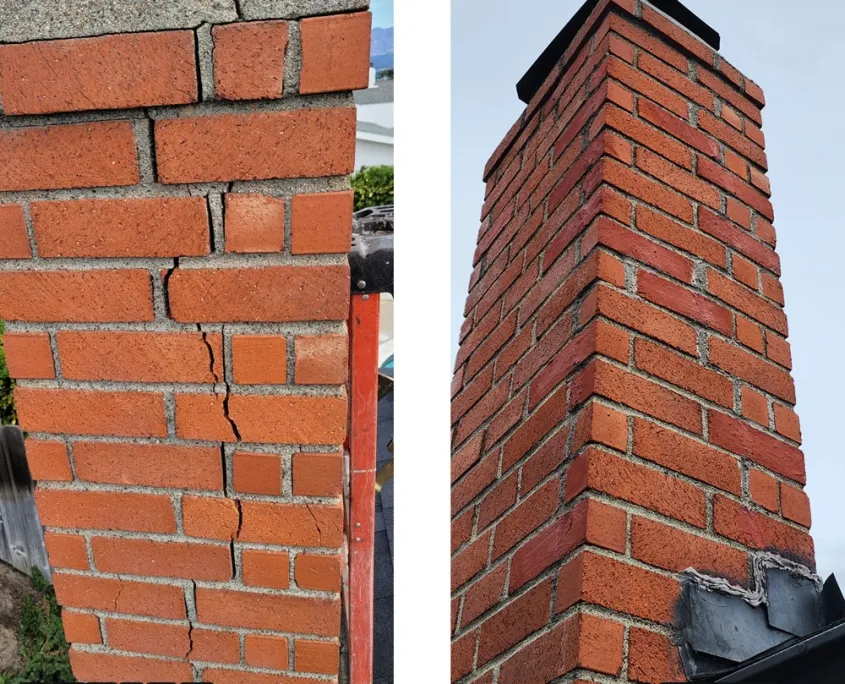
Chimney Camera Inspection vs Traditional Inspection: What Orange County Homeowners Should Know
The debate between chimney camera inspection and traditional inspection comes up whenever an Orange County homeowner schedules service and wonders whether the camera actually matters. The short answer is yes.
The reasons are specific to how chimneys fail and what traditional methods cannot see. The most dangerous defects in a Southern California home are precisely the ones a mirror and flashlight will miss.
Lucky Sully Chimney Sweep has included video camera inspection as part of all chimney inspections in Orange County at no extra charge since investing in high-resolution equipment years ago. This guide explains what each method covers, where traditional inspection falls short, and how to know which one applies.
What a Traditional Chimney Inspection Actually Involves
A traditional chimney inspection is a visual assessment of all components a trained technician can access and observe directly. It has real value and remains the correct starting point for any chimney service visit. Understanding what it covers clarifies why camera inspection exists as a complement rather than a replacement.
What a Technician Can See Without a Camera
During a traditional inspection, the technician examines the chimney exterior from the ground and roofline. The crown, cap, flashing, and visible mortar joints are assessed for obvious deterioration. The firebox, damper, smoke shelf, and smoke chamber are examined from inside the home. A flashlight and mirror allow the technician to look up through the lower portion of the flue and down from the top of the chimney stack.
This covers a meaningful amount of the chimney system. Spalling brickwork, a damaged crown, a missing or corroded cap, and an obstructed smoke shelf are all detectable by traditional visual inspection. Heavy Stage 2 or Stage 3 creosote deposits are too. For a chimney in regular use with no significant change in conditions, this level of examination identifies most maintenance needs.
Where Traditional Inspection Reaches Its Limits
The limitation of traditional inspection is straightforward: the flue interior cannot be fully examined with a flashlight and mirror. A standard masonry flue runs vertically through the chimney for ten to thirty feet. A technician looking down from the top or up from the firebox sees the sections immediately adjacent to each opening. The sections in the middle of the flue, where the chimney passes through the attic and roof structure, are effectively invisible.
This is also where the most consequential damage tends to occur. Hairline cracks in clay tile liner sections, displaced mortar joints between flue tiles, and partial blockages in the mid-flue zone are conditions a traditional inspection cannot reliably detect. Chimney sweeping in Orange County removes surface deposits and gives the technician a cleaner view of accessible sections. But even after a thorough sweep, the mid-flue zone remains outside the line of sight.
What a Camera Inspection Adds to the Process
A camera inspection does not replace the visual assessment of exterior and accessible components. It extends the inspection into the sections of the flue that cannot be reached by direct observation.
How the Video Equipment Works
The camera is mounted on a flexible rod with adjustable LED lighting. The rod is fed through the entire length of the flue from top to bottom, or from the firebox upward when top access is restricted. The camera transmits a live high-definition video feed to a monitor. The technician records the footage throughout the inspection run.
Lucky Sully Chimney Sweep uses high-resolution equipment that produces footage clear enough to distinguish a hairline crack in a clay tile from surface discoloration. After the inspection, the video file is sent to the homeowner. This allows them to see the interior of their own chimney and verify that any findings in the written report correspond to actual conditions in their property.
What the Camera Sees That the Eye Cannot
The camera produces a continuous visual record of every tile section, every mortar joint, and every transition point between flue tile segments. It records the full interior surface of the chimney from the firebox connection to the cap. It illuminates sections of the flue that have never been visible during any previous inspection.
In practical terms, the camera finds things the traditional inspection consistently misses. Not occasionally misses. Consistently misses, because they are in locations that cannot be seen without optical assistance.
The Defects That Only a Camera Reliably Finds
Three categories of defect are particularly relevant to Orange County homes. All three are reliably detected by camera inspection and reliably missed by traditional inspection.
Hairline Flue Liner Cracks from Seismic Activity
Orange County sits near several active fault systems including the Newport-Inglewood fault. Seismic events cause differential movement in chimney masonry that cracks clay tile liner sections. These cracks are typically hairline width at first. They allow combustion gases, including carbon monoxide, to escape through the liner into surrounding masonry and potentially into living spaces above.
A hairline crack in a mid-flue tile section is invisible from the firebox or the chimney top. It produces no visible symptoms at the exterior and leaves no trace in the accessible portions of the chimney. A technician conducting a traditional inspection on a home that experienced a moderate seismic event will find nothing wrong. The camera finds the crack, documents it on video, and gives the homeowner specific information about its location and severity. Lucky Sully Chimney Sweep inspects every OC chimney with video precisely because seismic crack patterns in the mid-flue zone are a known and specific risk for Southern California properties.
Offset Mortar Joints and Displaced Tile Sections
In older masonry chimneys, mortar joints between individual flue tile sections degrade over decades. The clay tiles shift slightly as the mortar weakens, creating offsets where adjacent tiles no longer sit flush. These offsets accumulate creosote and debris on their leading edges. They also create gaps that bypass the liner’s containment function entirely.
Offset joints are a mid-flue phenomenon discovered on camera in a significant proportion of Orange County homes built before 1985. The homeowner has no reason to suspect the condition. There are no exterior symptoms. A traditional inspection produces a clean report. The camera shows a chimney that needs liner repair before it can be safely used.
Early-Stage Creosote and Partial Blockages
Stage 1 creosote is soft and removes during a standard sweep. Stage 2 creosote is hardened and requires chemical treatment. Both are accessible by traditional inspection in the accessible lower flue. But creosote accumulation is not uniform throughout the flue. Cold spots in the upper sections produce accelerated Stage 2 and Stage 3 deposits in mid-flue and upper-flue zones that traditional inspection cannot reach.
Animal nesting material, accumulated leaf debris, and partial blockages from collapsed mortar pieces tend to occur in the middle and upper sections of the flue. These restrict airflow, cause dangerous backdrafting, and can ignite during use. A camera confirms a clear flue from end to end. A traditional inspection confirms a clear flue only in the sections the technician can see. Addressing these conditions early with proper leaky chimney repair in Orange County prevents the kind of progressive deterioration that turns a hairline crack into a full liner failure.
When NFPA 211 Requires a Camera Inspection
The National Fire Protection Association’s NFPA 211 standard defines three inspection levels. Camera inspection is explicitly required at Level 2 and is the standard method for meeting the internal surface examination requirement.
Level 1 vs Level 2 vs Level 3: Where the Camera Comes In
A Level 1 inspection covers readily accessible portions of the chimney interior and exterior. No camera is explicitly required, though using one provides a more complete assessment than the standard demands.
A Level 2 inspection requires video scanning to examine all internal flue surfaces and joints. For Orange County homeowners buying or selling a property, this is not optional. It is the standard the transaction requires.
A Level 3 inspection goes further and may involve partial demolition of the chimney or surrounding structure to access concealed areas. Camera inspection is part of Level 3 but does not define it. Less than one percent of inspections require Level 3 in normal circumstances.
For a complete breakdown of what each level means in the context of a property purchase, the chimney inspections when buying a home guide covers the full process. Lucky Sully Chimney Sweep conducts Level 2 video inspections as the standard for most OC properties. The risk of missing a seismic crack or offset joint on a property that has only received Level 1 assessments is too high to justify the shortcut.
Want to see inside your own chimney? Lucky Sully Chimney Sweep includes high-resolution video inspection on every visit across Orange County. Call (714) 342-7415 or visit the contact page to schedule an inspection with a written report and video file sent directly to the homeowner.
Why Orange County Homes Specifically Need Camera Inspections
The case for camera inspection is strong nationally. It is particularly strong in Orange County for two reasons that do not apply equally to other markets.
Pre-1990 Masonry Chimneys and Seismic History
A significant proportion of Orange County homes were built between 1950 and 1990. Masonry chimneys from this period used clay tile liner construction with type-S mortar. These systems were well-built for their time but have now been through forty to seventy years of thermal cycling, moisture exposure, and seismic loading.
The 1987 Whittier Narrows, 1994 Northridge, and 2019 Ridgecrest earthquakes all produced ground motion that reached Orange County. Each event generated enough intensity to crack mortar joints and flue tiles in older masonry chimneys. Homes that have never had a camera inspection following these events may have cracked liners that have never been identified. A traditional inspection on these properties produces a clean report every single time, because the cracks are not in the visible sections of the flue.
Coastal Moisture and Prefab Chimney Liner Degradation
Prefabricated factory-built chimneys are common in OC homes built from the 1970s through the 1990s. These systems use a stainless steel or aluminium inner liner rather than clay tile. In coastal communities including Newport Beach, Huntington Beach, and Laguna Beach, salt air accelerates liner degradation. Pinhole corrosion and liner perforation in prefab chimney systems occurs in the mid-flue zone and is not detectable by traditional inspection methods.
A corroded liner in a prefab chimney allows combustion gases to contact combustible framing materials surrounding the chase. This is a fire risk that presents no visible symptoms from the exterior or the accessible chimney ends until the damage is advanced. Camera inspection identifies liner perforation at the stage where repair or relining resolves the problem. Catching it early costs a fraction of addressing a structural fire.
Does Every Inspection Need a Camera? Honest Answer for Homeowners
The direct answer is: for most Orange County homes, yes. The exceptions are narrow.
A Level 1 inspection without a camera is appropriate when a chimney has been regularly serviced with documented video inspections. The home should be relatively new with a modern liner in good condition. There should be no seismic events, chimney fires, or system changes since the last inspection. For a newer home with a clean inspection history and no complicating factors, a Level 1 without camera is a reasonable annual maintenance visit.
For any home built before 1990, camera inspection is the right standard. The same applies to any chimney without a documented video inspection in the past three years, any property changing hands, and any chimney in a coastal OC community. High-resolution video inspection is included on all chimney visits where camera insertion is physically possible. There is no extra charge. The video file is provided to the homeowner after every visit.
This is not common industry practice. Many chimney companies charge an additional $150 to $300 for video inspection, positioning it as a premium add-on. Including it as standard reflects the straightforward reality that a chimney inspection without video access to the full flue interior is an incomplete inspection for most Orange County properties.
The CSIA homeowner resources page provides additional context on what homeowners should expect from a certified inspection and what questions to ask when hiring a chimney sweep.
Conclusion
The difference between a chimney camera inspection and a traditional inspection is not thoroughness in the accessible sections. Both methods cover those well. The difference is what happens in the mid-flue zone, where the most consequential defects in Orange County chimneys tend to develop. Hairline cracks from seismic activity, offset mortar joints in pre-1990 masonry, and upper-flue creosote deposits all produce clean traditional inspection reports. Prefab liner corrosion in coastal properties does the same, while creating real fire and carbon monoxide risk.
For homeowners navigating a property purchase or sale, the requirement is clear: a Level 2 camera inspection is what NFPA 211 mandates and what protects buyer and seller alike. The chimney inspections when buying a home guide covers that process in full detail. Lucky Sully Chimney Sweep brings certified technicians and high-resolution video equipment to every inspection across Orange County. Every visit produces a written report and video file the homeowner keeps.
Lucky Sully Chimney Sweep serves Orange County with certified chimney inspections that include high-resolution video on every visit. Call (714) 342-7415 or reach the team through the contact page to schedule. Written reports and video files are provided after every inspection.
Frequently Asked Questions
1. What is the difference between a chimney camera inspection and a traditional chimney inspection?
A traditional inspection examines all accessible exterior and interior chimney components using direct visual observation, a flashlight, and a mirror. It covers the crown, cap, flashing, firebox, damper, and the visible portions of the lower and upper flue. A camera inspection extends this by running a high-definition camera through the entire flue length. It records internal surfaces, mortar joints, and liner sections that cannot be seen from the chimney ends. The camera does not replace the traditional visual assessment. It completes it by covering the mid-flue zone where the most consequential defects typically develop.
2. Can a traditional chimney inspection miss serious problems?
Yes, regularly. Hairline cracks in clay tile liner sections, offset mortar joints, and mid-flue creosote accumulation all occur in sections a traditional inspection cannot access. Pinhole corrosion in prefab steel liners is the same. These defects produce no visible symptoms at the exterior and leave no evidence in the accessible firebox or cap areas. A traditional inspection on a chimney with a cracked mid-flue liner can produce a completely clean report. A camera inspection on the same chimney documents the crack with video evidence and gives the homeowner specific information about its location and severity.
3. Does NFPA 211 require a camera for all chimney inspections?
No. Level 1 does not explicitly require a camera, though using one provides a more complete assessment. Level 2 is required when a home changes ownership or after a chimney fire. A seismic event, fuel type change, or any system modification also triggers Level 2. Level 3 inspections also use camera technology as part of a more invasive assessment process. For routine annual maintenance on a recently inspected chimney with no changes or events, a Level 1 without camera can be appropriate.
4. How much more does a camera chimney inspection cost compared to a traditional one?
The cost difference varies by provider. Many chimney companies charge an additional $150 to $300 for video inspection, treating it as a premium add-on. Lucky Sully Chimney Sweep includes high-resolution video inspection on all chimney visits where camera insertion is possible, at no extra charge. The video file is provided to the homeowner after every inspection. When comparing quotes, ask whether the price includes full video documentation of the flue interior and a written report. The video file should be provided to the homeowner for their records.
5. How often do Orange County homeowners need a camera inspection?
For most Orange County homes, particularly those built before 1990 or located in coastal communities, camera inspection on every annual visit is the right standard. For newer homes with a recent clean video inspection history and no intervening seismic events, a camera inspection every two to three years alongside annual Level 1 maintenance is reasonable. Any property changing ownership requires a Level 2 camera inspection regardless of age or recent service history. Any chimney without a documented video inspection should receive one before the next fire season.
6. What specific defects can a chimney camera find that a traditional inspection cannot?
The camera reliably finds four categories of defect that traditional inspection consistently misses. First, hairline cracks in clay tile liner sections caused by seismic activity or thermal cycling in the mid-flue sections above the smoke chamber. Second, offset mortar joints where adjacent flue tiles have shifted out of alignment as the original mortar degraded. Third, upper-flue and mid-flue creosote accumulation in cold zones where combustion gases cool before exiting the chimney. Fourth, corrosion perforations in prefab stainless steel or aluminium liners, particularly in coastal OC properties where salt air accelerates liner degradation from the outside while combustion gases attack from within.


