
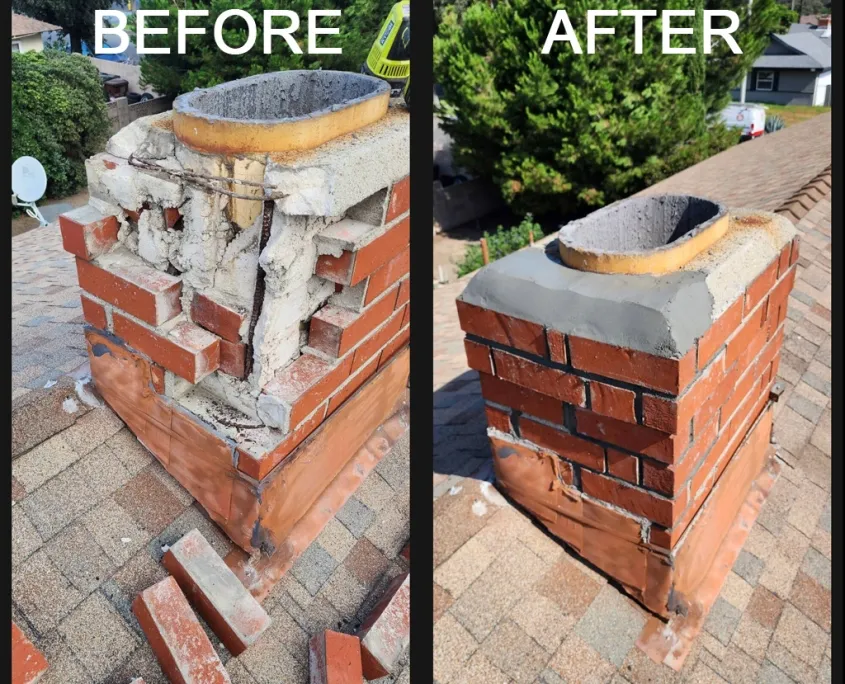
The Hidden Cost of Delaying Chimney Repairs in California
The hidden cost of delaying chimney repairs in California is not just a larger repair bill. It is a cascade of secondary damage, insurance exposure, and fire risk that compounds with each passing month. California homeowners face a steeper penalty for delay than those in most other states because the environment here magnifies every chimney defect.
Lucky Sully Chimney Sweep has provided chimney and fireplace repairs in Orange County since 2004. In that time, the team has seen how a $250 crown repair becomes a $4,000 water restoration project. One season of delay is often all it takes.
This guide maps exactly what each deferred repair costs and why California’s wildfire, seismic, and insurance environment makes the delay penalty uniquely severe.
Why California Homeowners Face Higher Delay Costs Than the National Average
Most chimney defects follow a predictable escalation path regardless of geography. A cracked flue liner, left unrepaired, eventually fails completely. A deteriorated mortar joint eventually admits water. These trajectories are universal. California adds an environment that accelerates every stage of the escalation path. It also introduces risks that simply do not exist in most other markets.
Wildfire Risk Turns a Cracked Flue Into a Liability
California’s wildfire environment creates a direct connection between chimney condition and catastrophic fire risk that does not apply to the same degree in wetter climates. A cracked flue liner in a New England home may allow carbon monoxide migration for years before the damage becomes serious. A cracked flue liner in a Southern California home sits in a wildfire-adjacent environment. Ember intrusion, radiant heat from nearby fires, and ignition of accumulated creosote through a compromised liner are all credible loss scenarios here.
Orange County communities including Laguna Niguel, Mission Viejo, San Juan Capistrano, and parts of Irvine sit within Cal Fire-designated fire hazard severity zones. A chimney with a known crack in these communities is an active risk factor, not just a maintenance issue. Insurance carriers writing policies in these zones are increasingly treating undocumented chimney defects as grounds for reduced or denied coverage. This applies specifically when a fire-related claim is filed.
Seismic Activity Compounds Unrepaired Masonry Damage
California’s seismic environment gives chimney damage a compounding quality that does not occur in stable geological regions. A hairline crack in a clay tile liner caused by the 2019 Ridgecrest earthquake has been widening with each subsequent thermal cycle since. Heat causes the clay tile and surrounding mortar to expand. Cooling causes contraction.
Each cycle opens the crack slightly further. By the time a homeowner notices a symptom, what began as a hairline crack three years ago is now a significant gap.
This compounding quality means that seismic damage left unrepaired does not hold steady at its initial severity. It progresses whether or not the fireplace is used and whether or not the homeowner is aware of it.
A masonry chimney in Orange County that has not received a camera inspection since a significant seismic event should be assumed to have progressed. Thermal cycling in the seasons since the event will have widened the initial cracks.
The 5 Repairs That Escalate the Fastest When Delayed
Not all chimney defects escalate at the same rate. Five specific issues account for the majority of serious repair bills that Lucky Sully Chimney Sweep encounters on properties where maintenance has been deferred. Each starts small and ends expensively.
1. Flashing Failure and Water Intrusion
Chimney flashing seals the joint between the chimney and the roof surface. When the flashing seal begins to fail, water enters the gap. At first, it dampens the adjacent roof deck during heavy rain. Within one season of unchecked entry, it begins saturating the attic insulation. Within two seasons, it begins rotting the roof framing members adjacent to the chimney.
A flashing resealing job costs between $150 and $400. That same entry point, left open for eighteen months, produces attic insulation replacement, roof deck repair, and in many cases, mold remediation. The total for that cascade routinely reaches $3,500 to $6,000 in Orange County, where contractor rates reflect the local cost of living.
Addressing leaky chimney repair in Orange County at the first sign of entry costs a fraction of the eventual bill. The same entry point left open for two rainy seasons produces attic, framing, and mold costs that are orders of magnitude higher.
2. Chimney Crown Cracks
The chimney crown is the mortar slab that seals the top of the masonry chimney around the flue tile. It takes direct exposure to rain, sun, and temperature variation. Small cracks form as the mortar cures over decades and as thermal expansion stresses the slab. A hairline crack in the crown allows water to run directly into the top of the masonry, where it saturates the brick and mortar courses below.
A crown crack repair or recoating costs between $200 and $600. A crown left cracked through two winters in a climate with OC’s cool-warm seasonal swings produces progressive mortar joint deterioration in the upper chimney courses. Eventually the upper section of the chimney requires rebuilding. Chimney section rebuilds start at $1,500 and reach $4,000 or more depending on how many courses of brick have been compromised.
3. Flue Liner Damage
A damaged flue liner is the repair with the most dangerous delay profile of any chimney defect. A compromised liner allows combustion gases, including carbon monoxide, to migrate into the surrounding masonry and potentially into the living spaces above. It also allows the outer masonry to absorb heat it was never designed to contain. This creates a structural fire risk in the adjacent framing.
A single cracked clay tile section can often be repaired or a stainless steel liner insert installed to resolve the issue. This costs between $800 and $2,500 depending on the flue configuration. A liner left damaged for two or more fire seasons requires a complete liner replacement. Multiple cracks propagate from the original failure point during that period.
Full liner relining costs between $2,500 and $6,000. In prefab chimney systems common in OC homes from the 1980s and 1990s, complete liner failure can necessitate full chimney replacement. That cost runs $8,000 and above.
4. Mortar Joint Deterioration and Spalling
Mortar joints between brick courses absorb water and degrade over time. In the early stages, hairline cracking is present but the structural integrity of the chimney is sound. A repointing job at this stage costs between $300 and $800 for a standard chimney.
Left unaddressed, water penetrates the deteriorated joints and begins to spall the brick faces adjacent to them. Spalled brick cannot be repointed effectively because the face is gone. Each spalled brick requires individual replacement or the affected section requires rebuilding. A chimney that needed $400 of repointing at the hairline crack stage can require $3,000 to $5,000 of masonry restoration once spalling has progressed. Multiple brick courses are affected by that point.
5. Creosote Buildup Beyond Stage 1
Stage 1 creosote is soft, flaky, and removes completely during a standard chimney sweep. Stage 2 creosote is hardened and requires chemical treatment and mechanical removal. Stage 3 creosote is glazed, extremely flammable, and in many cases requires professional chemical treatment over multiple sessions or full liner replacement to address safely.
The cost difference between removing Stage 1 and addressing Stage 3 is not proportional to the amount of additional buildup. Stage 1 removal costs $150 to $300 as part of a standard cleaning visit. Stage 3 treatment starts at $1,500 and in severe cases requires relining after chemical removal. The transition from Stage 1 to Stage 2 takes one to two fire seasons without cleaning in a regularly used fireplace.
The transition from Stage 2 to Stage 3 can happen within a single heavy-use season. Lucky Sully Chimney Sweep documents the creosote stage at every inspection visit. Homeowners receive a clear picture of where their chimney stands and what the trajectory looks like without intervention.
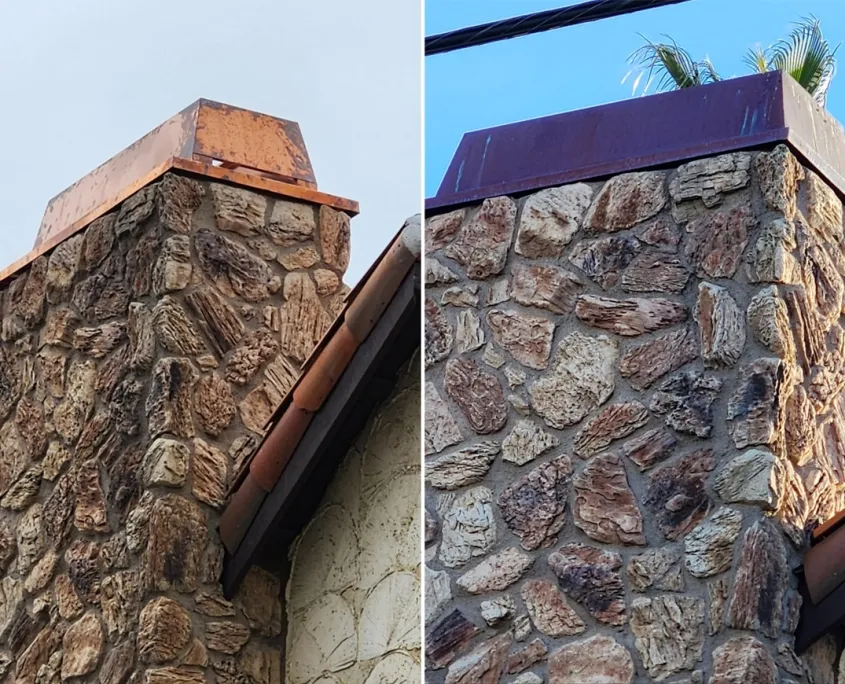
Cost Escalation by Repair Type
| Defect | Repair Cost at Discovery | Cost at 12 Months Without Repair | Cost at 24 Months Without Repair |
|---|---|---|---|
| Flashing seal failure | $150 to $400 | $800 to $2,500 (roof deck moisture) | $3,500 to $6,000 (attic framing, mold) |
| Crown crack | $200 to $600 | $600 to $1,500 (joint deterioration) | $1,500 to $4,000 (section rebuild) |
| Flue liner crack | $800 to $2,500 | $2,000 to $4,500 (multiple cracks) | $2,500 to $8,000+ (full reline or replace) |
| Mortar joint hairline | $300 to $800 | $800 to $2,000 (spalling begins) | $3,000 to $5,000 (masonry restoration) |
| Stage 1 to Stage 2 creosote | $150 to $300 | $600 to $1,200 (chemical treatment) | $1,500 to $4,000+ (Stage 3 treatment or reline) |
Costs reflect Orange County contractor rates for 2026. All ranges assume a standard single-flue masonry chimney. Multi-flue or prefab systems may differ.
The Insurance Angle: Why California Insurers Deny Deferred Maintenance Claims
California’s homeowners insurance market has tightened significantly since 2024. Several major carriers have reduced coverage availability across Southern California. Those that remain have become more rigorous in applying the standard policy exclusion for losses attributable to gradual deterioration and deferred maintenance.
The relevant clause appears in most standard California homeowners policies under the exclusions section. It states that the policy does not cover damage resulting from continuous or repeated seepage, leakage, or deterioration. Rust, corrosion, and failure to maintain the property in good repair are also excluded. An insurance adjuster reviewing a fire or water damage claim that involves a chimney does not need to prove that the homeowner was negligent. They need only demonstrate that a deficiency existed prior to the loss and was not addressed.
Annual documented chimney inspections in Orange County create the paper trail that protects coverage. A clean inspection report or a report showing identified issues that were promptly repaired closes the adjuster’s line of inquiry. Lucky Sully Chimney Sweep provides written inspection reports after every visit, with photographs and video that document both current condition and any work completed.
Seeing a crack, stain, or smoke issue you have been putting off? Lucky Sully Chimney Sweep serves all of Orange County with same-week availability. Call (714) 342-7415 or visit the contact page to schedule a video inspection and written report before a minor repair becomes a major one.
The Compounding Effect: How One Deferred Repair Creates Three More
The most expensive aspect of deferred chimney maintenance is not the original defect itself. It is the secondary damage that the original defect produces while waiting to be addressed.
The Flashing-to-Attic-to-Mold Cascade
A failed flashing seal admits water at the chimney-roof junction. That water follows gravity and the path of least resistance through the roof assembly. In a typical OC home, water first saturates the roofing underlayment adjacent to the chimney. It then penetrates the roof deck sheathing and enters the attic space. In the attic, it saturates insulation and begins to wet the framing members. In the warm, enclosed environment of a Southern California attic, mold colonies begin forming on wet framing within 24 to 48 hours of moisture introduction.
By the time a homeowner notices a water stain on the ceiling below, the mold is already established in the attic. Mold remediation in a Southern California attic costs between $2,000 and $8,000 depending on the extent of colonisation.
Adding this to the flashing repair, roof deck replacement, and insulation work, a single deferred flashing job routinely produces $5,000 to $10,000 in total restoration costs.
The Liner Crack-to-Carbon Monoxide-to-Claim Denial Chain
A cracked flue liner allows combustion gases to escape through the liner into the surrounding masonry. In a masonry chimney, this gas migration is partially contained by the surrounding brick. In a prefab chimney where the liner sits inside a combustible chase, the gases contact the wood framing directly.
Carbon monoxide migrates through the chimney structure and into the living spaces through any gap in the interior drywall adjacent to the chase.
The insidious nature of this chain is that it is entirely asymptomatic until it is not. A homeowner using a fireplace with a cracked liner may have elevated carbon monoxide levels in their home for an entire fire season. There is no visible indication this is occurring. The defect that causes this is undetectable by traditional inspection methods and is only revealed by camera inspection of the full flue length.
What Gets Missed Without a Camera and How It Adds to the Cost
The defects that drive the highest repair escalation costs in Orange County chimneys are overwhelmingly mid-flue defects. Flue liner cracks, offset mortar joints in older masonry, and creosote in upper cold zones all develop in sections a traditional inspection cannot reach. These are the most expensive findings in OC homes with deferred maintenance.
A homeowner who has received traditional inspections annually but has never had a camera inspection may be making annual maintenance decisions based on incomplete information. Every year the camera-only-detectable defect goes undiscovered, it progresses. The repair cost at discovery is correspondingly higher. Understanding what a camera inspection finds and why it matters for OC properties is covered in the chimney camera inspection vs traditional inspection guide. It is the essential companion to this post for any homeowner making repair decisions.
The California Department of Insurance homeowner resources page provides further context on what California homeowners insurance covers and excludes. It also explains how maintenance documentation affects claim outcomes.
Conclusion
The hidden cost of delaying chimney repairs in California is measurable, predictable, and avoidable. Each of the five defects that escalate fastest follows a documented trajectory from a repair that costs hundreds of dollars to one that costs thousands. California’s wildfire risk, seismic environment, and insurance market make each stage of that trajectory more consequential than it would be in a lower-risk state.
The homeowners who face the largest bills are almost never those who discover a serious problem immediately. They are the ones who knew something was wrong and decided to wait.
Lucky Sully Chimney Sweep has served Orange County homeowners since 2004 with the inspection and repair services that interrupt that trajectory before the cost compounds. A written report, a video of the flue interior, and a clear recommendation on what needs attention and what can wait. That is what every inspection visit produces.
Lucky Sully Chimney Sweep provides certified chimney inspections and repairs across Orange County. Call (714) 342-7415 or reach the team through the contact page to schedule. Written reports and video documentation are included with every inspection.
Frequently Asked Questions
1. How much more does a chimney repair cost if I delay it by 12 months in California?
The cost increase depends on the type of defect. Flashing failure that costs $150 to $400 at discovery can reach $800 to $2,500 after twelve months. Water will have begun saturating the roof deck by that point. A crown crack that costs $200 to $600 can require $600 to $1,500 of joint work after a year of unchecked water entry. A hairline liner crack that costs $800 to $2,500 to address promptly can require $2,000 to $4,500 after a year of thermal cycling. Multiple cracks propagate from the original failure point over that period. In every case, the 12-month cost is two to five times the immediate repair cost.
2. Will my California homeowners insurance cover chimney repairs I delayed?
California homeowners insurance policies cover chimney damage from sudden and accidental events such as fires, lightning strikes, and falling objects. They generally do not cover damage resulting from gradual deterioration, deferred maintenance, or known conditions that were not addressed. If an adjuster can demonstrate that a chimney deficiency existed before a loss and was not repaired, the carrier can apply the maintenance exclusion. This can reduce or deny the claim entirely. This is particularly relevant for water damage from failed flashing or crown cracks. Fire damage where Stage 3 creosote or a damaged liner was a contributing factor faces the same scrutiny.
3. What is the most expensive chimney repair that usually starts as a minor issue?
Flue liner damage carries the highest potential escalation cost. A single cracked tile section can progress through multiple liner sections over two fire seasons of thermal cycling. Seismic loading between seasons accelerates this further. Full liner replacement for a masonry chimney costs $2,500 to $6,000. In prefab chimney systems common in OC homes built from the 1970s through the 1990s, complete liner failure can require full system replacement. Costs for this work run $8,000 and above. The additional risk is that liner damage is asymptomatic and invisible without camera inspection. It can progress for years before a homeowner has any indication the issue exists.
4. Does wildfire risk in Southern California make chimney repair delays more dangerous?
Yes, in two specific ways. First, a cracked or compromised flue liner in a wildfire-adjacent community increases the risk of ember intrusion and internal ignition during a nearby fire event. Second, California insurers underwriting homes in fire hazard severity zones are increasingly attentive to chimney maintenance documentation when reviewing claims. A chimney with documented deficiencies that were not repaired is more likely to face coverage challenges in a fire-related claim. Clean inspection records are the homeowner’s primary defence. Orange County communities including Laguna Niguel, Mission Viejo, and parts of Irvine sit in or adjacent to designated fire hazard zones. This is where insurer scrutiny on chimney maintenance is most active.
5. How does seismic activity in Orange County make deferred chimney repairs worse?
Seismic events create hairline cracks in clay tile flue liners and masonry mortar joints. These cracks widen with each subsequent thermal cycle as the chimney heats and cools during use. A crack that is hairline width at the time of the seismic event becomes measurably wider after one or two fire seasons. This compounding effect means that the repair cost at discovery is almost always higher than it would have been immediately after the seismic event. Thermal cycling between the event and the inspection opens cracks further each season. Orange County sits near several active fault systems including the Newport-Inglewood fault. Any significant seismic event should be followed by a Level 2 camera inspection to document the baseline condition before thermal cycling progresses the damage further.
6. What is the first sign that a chimney repair is overdue in a California home?
The most common early warning sign is white or grey powder staining on the exterior masonry, known as efflorescence. This indicates that moisture and dissolved salts are actively migrating through the brick or mortar and confirms that water is entering the masonry. Other early indicators include a rust stain below the chimney cap. This suggests the cap is corroding from within its structural components rather than just on the surface, and replacement is overdue. Inside the home, a persistent smoky smell when the fireplace is not in use indicates a draft or liner issue. Difficulty establishing a draft when lighting a fire is another signal. A visible dark stain on the ceiling near the chimney confirms that a defect is already producing secondary effects.


